Utah Species Field Guide | Utah Natural Heritage Program
Utah Species Field Guide Utah Species Field Guide
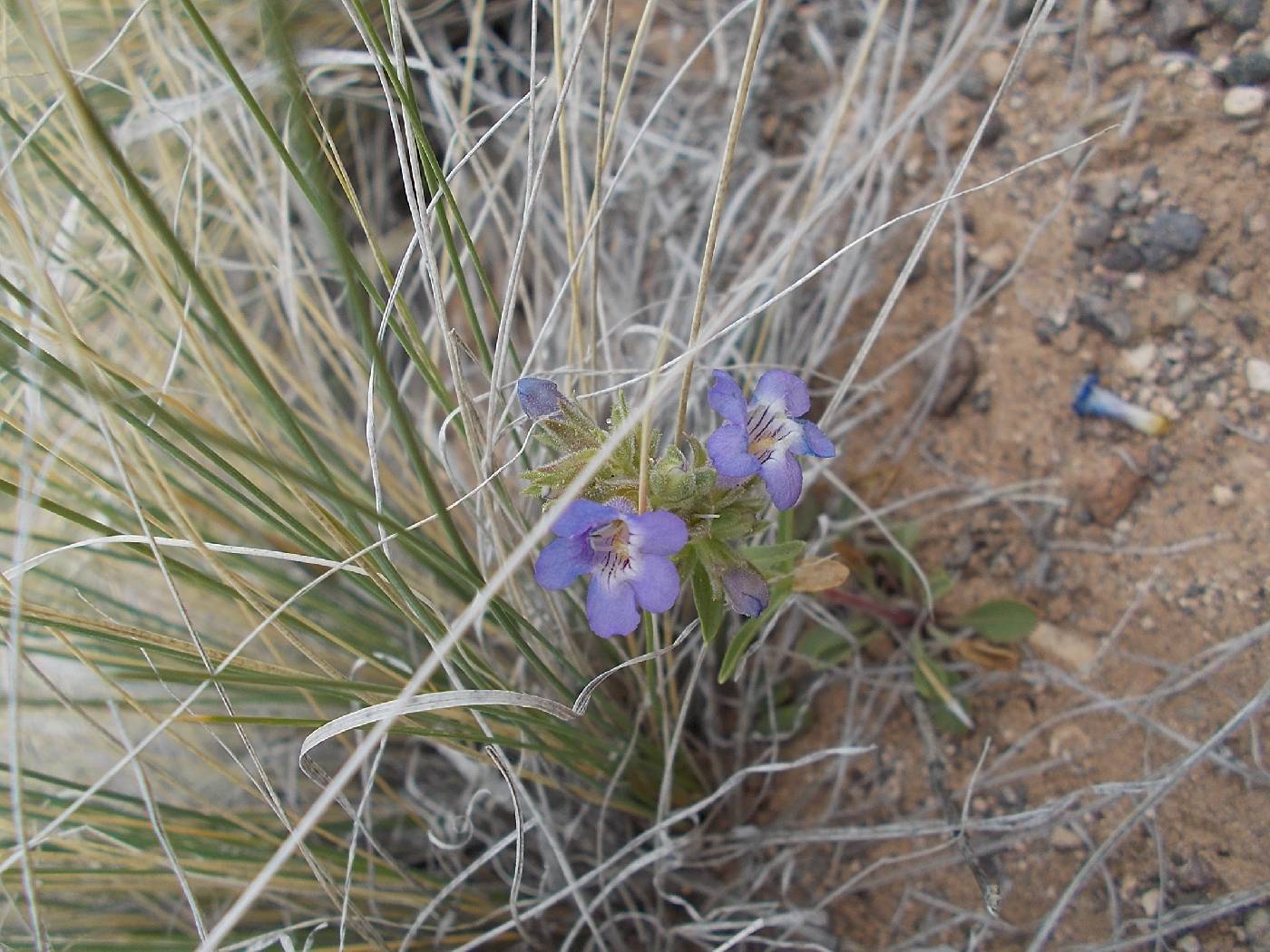
Ben's Beardtongue (Penstemon franklinii)

(Tap or click to view all images.)

Photo by Walter Fertig
Sources: ESRI, USGS, NOAA; Walter Fertig

Ben's Beardtongue

Ben's Beardtongue (Penstemon franklinii)

Photo by Walter Fertig
Sources: ESRI, USGS, NOAA; Walter Fertig

Penstemon franklinii

NatureServe conservation status

Global (G-rank): G1
State (S-rank): S1S2

External links

Phenology

Flowers May to June.

Diagnostic characteristics

Penstemon franklinii and Penstemon pinorum are regionally similar species which both occur in Iron County, Utah. These species can be positively identified by floral features and by their leaves.

  • Penstemon franklinii has larger flowers which measure 14-22 mm long and larger anthers which measure 1.6-1.8 mm long.  The leaves have entire or slightly toothed leaf margins.
  • Penstemon pinorum has smaller flowers that are 10-15 mm long and smaller anthers which are 1.1-1.4 mm long. The leaves have sharply toothed leaf margins.

Species range

Utah Great Basin endemic, known only from the north end of Cedar Valley in Iron County, Utah.

Threats or limiting factors

The main threats are from habitat degradation due to grazing, transmission line corridors, invasive species, drought, and road maintenance. In 2005 there was a threat of energy lease sales in the area. Areas were deferred from the sale due to the presence of this plant.


Species search

Species search


Multicellular organisms that are autotrophic or make complex carbohydrates from basic constituents. Most use photosynthesis.

Flowering plants that produce seeds enclosed in an ovary

Multicellular organisms that develop from the fertilization of an egg by a sperm. Heterotrophic - obtain food by ingestion.

Have skulls and backbones.

Cold blooded, lay eggs on land

Have feathers and lay eggs

Invertebrates with an exoskeleton, jointed appendages, and segmented bodies

Animals having 3 pair of legs, 3 body sections, generally 1 or 2 pair of wings, 1 pair of antennae.

Soft bodied animals with an internal or external shell and a toothed tongue or radula. Have a mantle that lines and secretes the shell and a muscular foot that allows for movement.

Two hinged lateral shells and a wedged shaped "foot". Bivalves lack tentacles and a head.


Lee Kay and Cache Valley Shooting Centers
» Shooting centers
Wildlife Blog: Views from DWR employees
» Wildlife Blog
Report poachers — 1-800-662-3337
» Report poachers
Wildlife dates
» Important dates
Hunter, angler mobile app
Hunter Education: Sign up for classes
» Hunter education
The Natural Resources Map & Bookstore: discover hands-on resources
» DNR Map & Bookstore