Law enforcement
Hunting Hunting

Law enforcement

Conservation officers at work

Utah DNR conservation officer holding a scope

Utah Department of Natural Resources law enforcement officers are first and foremost public servants. We serve as the protector and guardian of the people's wildlife. Holding violators accountable ensures healthy wildlife populations for future generations.
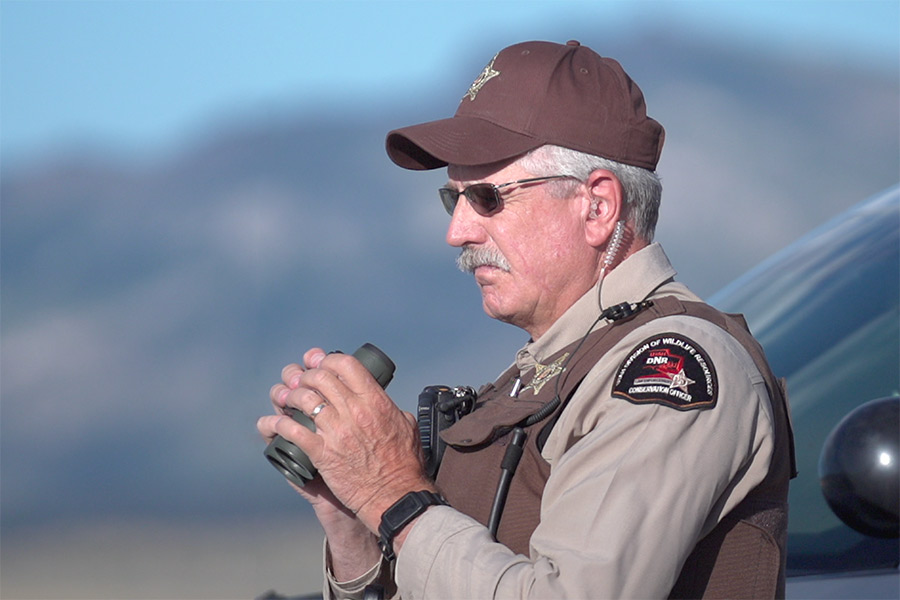
Utah DNR conservation officer holding a scope

Our conservation officers understand that most of the people we contact are lawfully hunting or fishing, and we strive to deliver excellent customer service.

A day in the life of a Natural Resources officer is varied, unpredictable, rewarding and never typical. We spend the vast majority of our time in the field, performing patrol functions in every corner of the state — from remote high-mountain lakes to rough red rock canyons. We serve Utah's people and protect wildlife in small towns and bustling urban communities.

At any given time you'll find Utah's conservation officers:

  • Deterring and intercepting poachers
  • Responding to and investigating reports of wildlife-related crimes
  • Supporting hunter-safety programs
  • Actively enforcing safety-related laws in the field
  • Responding to emergency call-outs on nights, weekends and holidays
  • Assisting biologists with wildlife surveys
  • Relocating wildlife to protect the safety of people and animals
  • Protecting critical wildlife habitat
  • Working alongside allied law enforcement agencies by enforcing criminal code, assisting with vehicle accidents, medical emergencies, search-and-rescue efforts and generally serving the people of Utah

Our goal is to build and strengthen relationships within the communities we interact with, the user groups we serve and the allied agencies we work alongside.

Learn more about our specialized teams and directed efforts throughout Utah
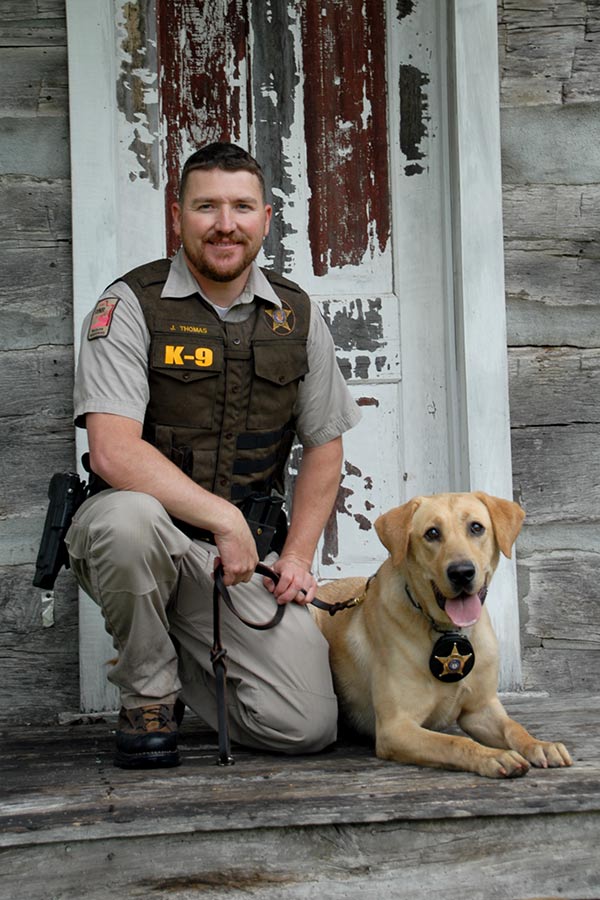
DWR Officer James Thomas and K-9 Kip
K-9 Team

Our K-9s have been certified and trained to detect wildlife and specific types of evidence. The canine officers and their handlers assist with search-and-rescue efforts, investigate wildlife-related crimes, ensure public safety and protect Utah's wildlife.

Investigations Unit

Investigations Unit members possess highly developed skills and deploy cutting-edge technology in the ongoing effort to protect your wildlife.

Unmanned Aerial System (Drone) Team

Housed within the Investigations Unit, the Drone Team provides our conservation officers with critical visual assets to document crime scenes, search for evidence, conduct biological surveys, track nuisance animals, and investigate human/animal encounters.

Aquatic Invasive Species Interdiction

DNR Law Enforcement's AIS staff — supported by conservation officers — work at multiple levels to stop the spread of aquatic invasive species to other waterways, and protect the integrity of Utah's critical water delivery infrastructure.
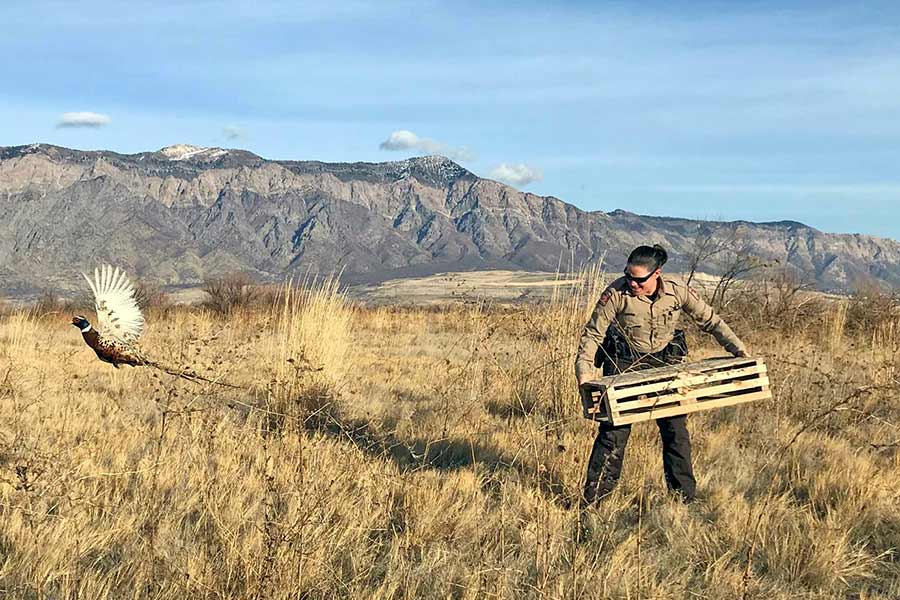
Female conservation officer letting a phesant out of a wooden cage
Training Team

Inservice instructors and Field Training Officers are critical to the success of their fellow conservation officers. They provide invaluable knowledge and training that keeps the DNR Division of Law Enforcement moving forward and our officers always ready to meet the challenges of the job.

Honor Guard

Formed in 2003, the Honor Guard performs ceremonial duties in various capacities, including honoring former conservation officers.

See more about our officers on patrol and information about becoming a conservation officer.
DNR law enforcement feedback

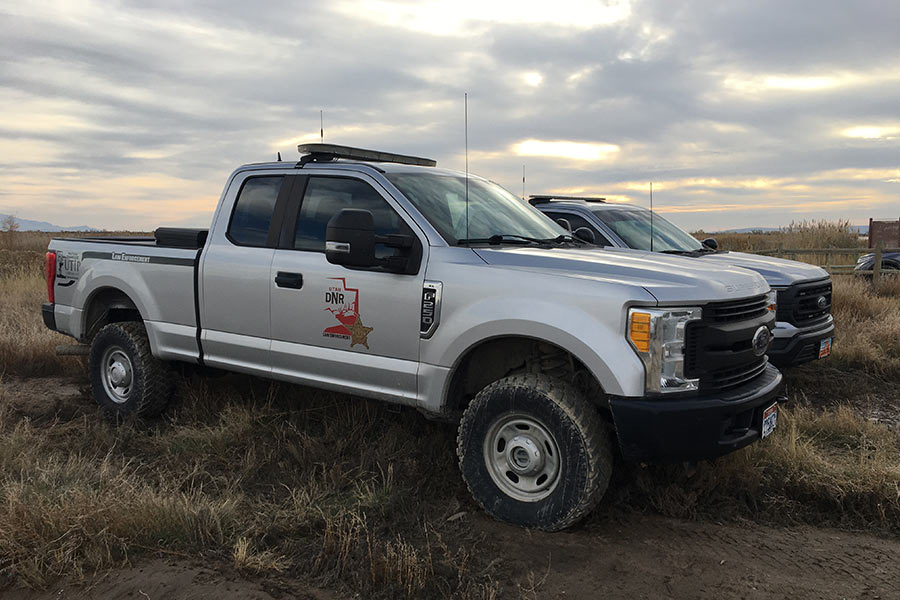
Two Utah of Division Wildlife Resources law enforcement trucks parked in a field under a cloudy sky

Responsive and accountable

Two Utah of Division Wildlife Resources law enforcement trucks parked in a field under a cloudy sky

Utah Department of Natural Resources law enforcement officers work hard every day to serve in a manner worthy of the public's trust. If you would like to share an experience — positive or negative — that you've recently had with a Utah DNR conservation officer, send us an email at This email address is being protected from spambots. You need JavaScript enabled to view it..

The support of Utah's outdoors enthusiasts is crucial to the work of wildlife conservation, and we strive for an overwhelming majority of positive public interactions. Holding wildlife-crime violators accountable for their actions is an ongoing effort, and we couldn't do it without you.

Thank you!

We have received your wildlife law violation report. If you provided contact information, you will hear back from us soon depending on the urgency of your report. Within a few moments, if you supplied your email address, you should also receive an email containing a record of your report.

We greatly appreciate your report and your willingness to help protect our valuable and important wildlife resources.

badge

Turn in a poacher

Help us protect your wildlife, turn in a suspected wildlife violation.

If you witness an in-progress wildlife violation — or you're aware of a previously committed wildlife crime — please contact DNR conservation officers as soon as possible. Your four contact options are listed below in order of urgency:

  1. Send a text to 847411
  2. Call the UTiP hotline at 800-662-3337
  3. Submit a tip through the DWR Law Enforcement app
  4. Submit a tip online

1. Text UTiP

847411

Text us any information you can about the violation. Tips can be directed to the appropriate DWR region by adding the following keywords to the body of the text message:

Note: Please include the desired keyword in your text, or the respective office won't receive it.

2. Call the UTiP hotline

800-662-3337

This is the Utah Turn-in-a-Poacher (UTiP) hotline, and it's the fastest way to get in touch with us. It's staffed 24 hours per day, 365 days per year. Hotline operators will ask you detailed questions about what you saw, and in many instances, may patch you directly through to a local conservation officer.

Note: If you are witnessing a public safety emergency, please call 911.

3. Use the DWR Law Enforcement app

If the violation may not demand an immediate response, or if you're unwilling or unable to speak with UTiP hotline operators, you may submit a tip through the DWR Law Enforcement app, which is available as a free download for iOS (Apple) and Android devices. This reporting option will initiate a chat conversation with DNR Law Enforcement personnel. You may remain anonymous, if you wish, but we encourage you to provide your name and contact information to better assist the investigating officers.

Download the iOS version of the DWR Law Enforcement app from the Apple App Store
Download the Android version of the DWR Law Enforcement app from the Google Play Store

4. Submit a tip online

You may also submit an online tip using the map below. If you choose this reporting option, please understand that system limitations may make it difficult for our officers to contact you with any follow-up questions. Please provide detailed, comprehensive information in the body of your report — or be sure to include your name and contact information — to ensure that investigating officers can obtain the details they need.

Click or tap one of the links or the location of the violation on the DWR region map. This will ensure the tip is routed to appropriate patrol staff.

Milford Beaver Tremonton Brigham City Logan Price Farmington Bountiful Roosevelt Duchesne Castle Dale Green River Panguitch Escalante Moab Parowan Cedar City Nephi Kanab Big Water Fillmore Morgan Junction Salt Lake City Monticello Manti Ephraim Richfield Wendover Tooele City Vernal Provo Spanish Fork American Fork Heber Saint George Hanksville Loa Torrey Ogden Park City Kamas SOUTHEASTERN REGION NORTHEASTERN REGION CENTRAL REGION NORTHERN REGION SOUTHERN REGION

Why should I care about reporting wildlife crimes?

Poachers are thieves. They steal resources and opportunities that you pay to enjoy. And in many instances, poachers waste wildlife, removing heads or claws and then leaving the rest of the animal to rot.

If you're an ethical hunter or angler, you care about wildlife and don't want to see it stolen or wasted. In recent years, dozens of high-profile poaching cases have been cracked with the help of people like you. You may also earn a reward for your efforts. Do your part to protect Utah's wildlife by reporting poachers immediately.

Turn in a poacher

Help us protect your wildlife, turn in a suspected wildlife violation.

If you witness an in-progress wildlife violation — or you're aware of a previously committed wildlife crime — please contact DWR conservation officers as soon as possible. Your four contact options are listed below in order of urgency:

  1. Call the UTiP hotline at 1-800-662-3337
  2. Submit a tip through the DWR Law Enforcement app
  3. Send a text to 847411
  4. Submit a tip online (contact with an officer may be more limited than with the other options)

1. Call the UTiP hotline

1-800-662-3337

This is the Utah Turn-in-a-Poacher (UTiP) hotline, and it's the fastest way to get in touch with us. It's staffed 24 hours per day, 365 days per year. Hotline operators will ask you detailed questions about what you saw, and in many instances, may patch you directly through to a local conservation officer.

Note: If you are witnessing a public safety emergency, please call 911.

2. Use the DWR Law Enforcement app

If the violation may not demand an immediate response, or if you're unwilling or unable to speak with UTiP hotline operators, you may submit a tip through the DWR Law Enforcement app, which is available as a free download for iOS (Apple) and Android devices. This reporting option will initiate a chat conversation with DWR Law Enforcement personnel. You may remain anonymous, if you wish, but we encourage you to provide your name and contact information to better assist the investigating officers.

Download the iOS version of the DWR Law Enforcement app from the Apple App Store
Download the Android version of the DWR Law Enforcement app from the Google Play Store

3. Text UTiP

847411

Text us any information you can about the violation. Tips can be directed to the appropriate DWR region by adding the following keywords to the body of the text message:

Note: Please include the desired keyword in your text, or the respective office won't receive it.

4. Submit a tip online (contact with an officer may be more limited than with the other options)

You may also submit an online tip using the map below. If you choose this reporting option, please understand that system limitations may make it difficult for our officers to contact you with any follow-up questions. Please provide detailed, comprehensive information in the body of your report — or be sure to include your name and contact information — to ensure that investigating officers can obtain the details they need.

Click or tap the location of the violation on the DWR region map. This will ensure the tip is routed to appropriate patrol staff. If you are unsure of the location, contact DWR Law Enforcement Headquarters.

SOUTHEASTERN REGION NORTHEASTERN REGION CENTRAL REGION NORTHERN REGION SOUTHERN REGION

Why should I care about reporting wildlife crimes?

Poachers are thieves. They steal resources and opportunities that you pay to enjoy. And in many instances, poachers waste wildlife, removing heads or claws and then leaving the rest of the animal to rot.

If you're an ethical hunter or angler, you care about wildlife and don't want to see it stolen or wasted. In recent years, dozens of high-profile poaching cases have been cracked with the help of people like you. You may also earn a reward for your efforts. Do your part to protect Utah's wildlife by reporting poachers immediately.

Subcategories

Officers on patrol

Officers on patrol

DNR law enforcement officers work to protect Utah's wildlife

The dispatches below are a fraction of our ongoing efforts to protect your wildlife. If you have information on illegal wildlife-related activities, please let us know. Our success depends on the help of ethical hunters, like yourself.

Quick links
Mandatory harvest reports: Submit your harvest report
» Report your harvest
Lee Kay and Cache Valley Shooting Centers
» Shooting centers
Wildlife Blog: Views from DWR employees
» Wildlife Blog
Report poachers — 1-800-662-3337
» Report poachers
Wildlife dates
» Important dates
Hunter, angler mobile app
Hunter Education: Sign up for classes
» Hunter education
The Natural Resources Map & Bookstore: discover hands-on resources
» DNR Map & Bookstore