
Wildlife diseases in Utah
Like people, animals are subject to a wide variety of ailments
Wildlife, domestic animals and humans share a large and increasing number of infectious diseases. The continuing globalization of society, increasing human populations and associated landscape changes will further enhance interfaces between wildlife, domestic animals and humans, thereby facilitating additional infectious disease emergence.
Wildlife species are subject to diseases resulting from exposure to microbes, parasites, toxins and other biological and physical agents. These wildlife diseases are often highly visible and result in large-scale mortality. Such losses are incompatible with healthy, vigorous wildlife populations — making research into, and development of, practical methods for wildlife disease diagnosis and mitigation of wildlife losses a critical component of effective wildlife management.
What the DWR is doing

The DWR has a wildlife disease program in place to (1) monitor and control diseases of concern, such as chronic wasting disease, whirling disease, West Nile virus and avian influenza; (2) investigate sick or dead wildlife reported by wildlife authorities and the public; (3) assess the effects of disease in Utah's wildlife populations; (4) reduce or eliminate diseases that threaten the health and vitality of Utah's wildlife, or that pose a human health risk.
Learn more about the following diseases found in wildlife:
Avian botulism

- Details
Avian botulism is a paralytic, often fatal, disease of birds that results from the ingestion of a toxin produced by the bacterium Clostridium botulinum.
Avian cholera
- Details
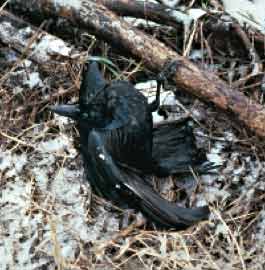
Avian cholera (aka fowl cholera, avian pasteurellosis) is caused by the highly infectious bacterium Pasteurella multocida, which is transmitted by direct bird-to-bird contact, ingestion of contaminated food or water, scavenging of carcasses, and aerosol form. Waterfowl are the birds most commonly affected by avian cholera, but it is likely that most species of birds and mammals are susceptible to differing degree.
Avian influenza
- Details
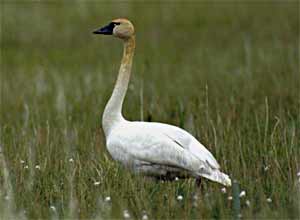
Avian influenza (aka "bird flu") viruses naturally occur in wild birds, especially waterfowl and shorebirds, and infections typically cause few, if any, symptoms. As of February 2026, 242 wild birds, one mountain lion, some skunks and three red foxes have tested positive for avian flu in Utah. The virus has been confirmed in 19 counties in Utah since 2022.
Avian pox
- Details
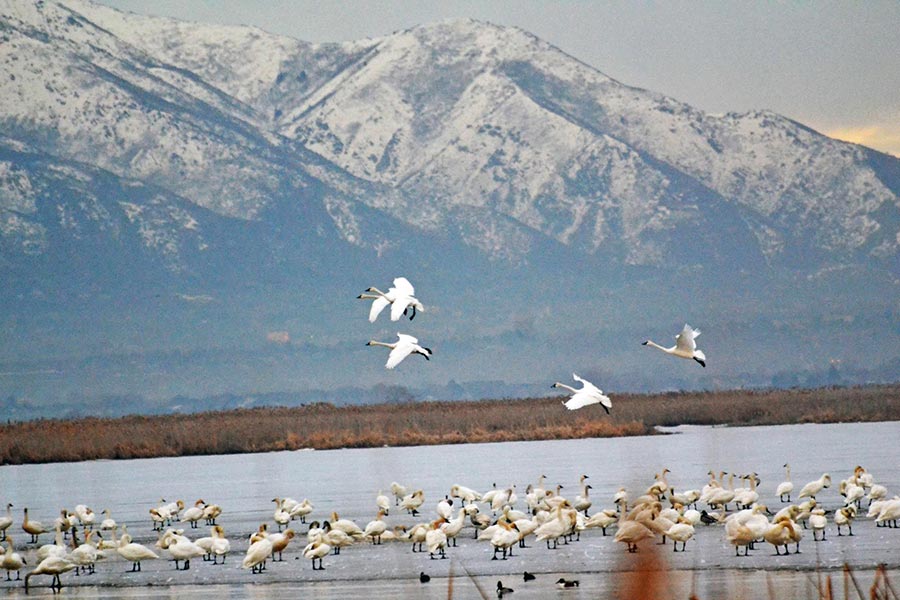
Avian pox is a slow-developing disease caused by a large virus from the avipoxvirus group. Pox outbreaks are commonly reported at aviaries and rehabilitation centers, where close contact facilitates transmission of the virus. There is no evidence that avipoxviruses can infect humans.
Avian salmonellosis
- Details
Avian salmonellosis is a group of diseases caused by bacteria from the genus Salmonella. Illness or death in wild birds usually only involves small numbers of cases.
Avian tuberculosis
- Details
Avian tuberculosis is caused by the bacterium Myobacterium avium, and is transmitted mainly through direct contract with infected birds, ingestion of contaminated feed and water, or contact with a contaminated environment.
Brucellosis
- Details
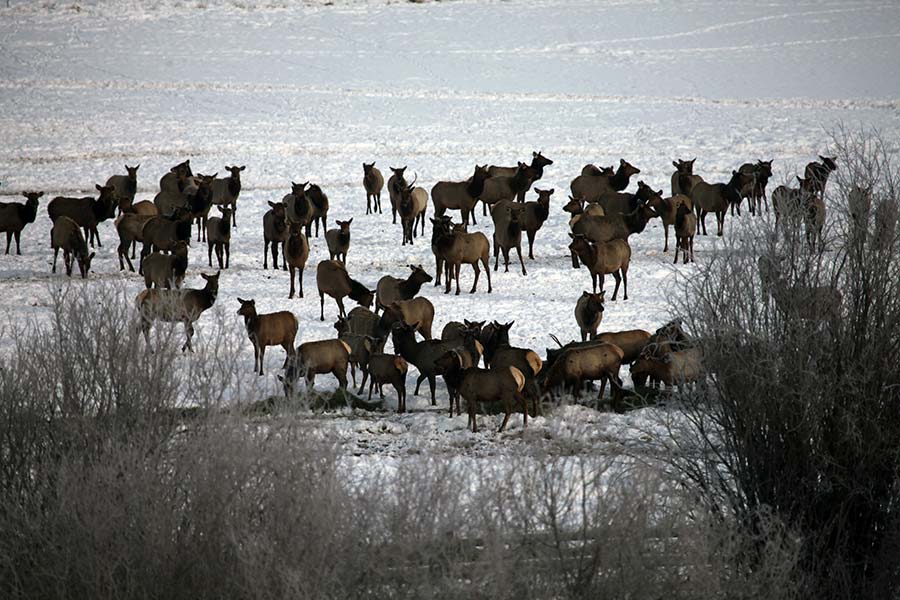
Brucellosis is caused by bacteria from the genus Brucella, and primarily affects ungulates (e.g., domestic livestock, bison, elk). The incurable disease localizes in the reproductive organs and/or the udder, resulting in abortion. Although almost eradicated in domestic livestock in the United States through efforts by USDA-APHIS and state animal health agencies, brucellosis is still a problem in wild bison and elk in the Greater Yellowstone Area of Wyoming and Idaho.
Canine distemper
- Details
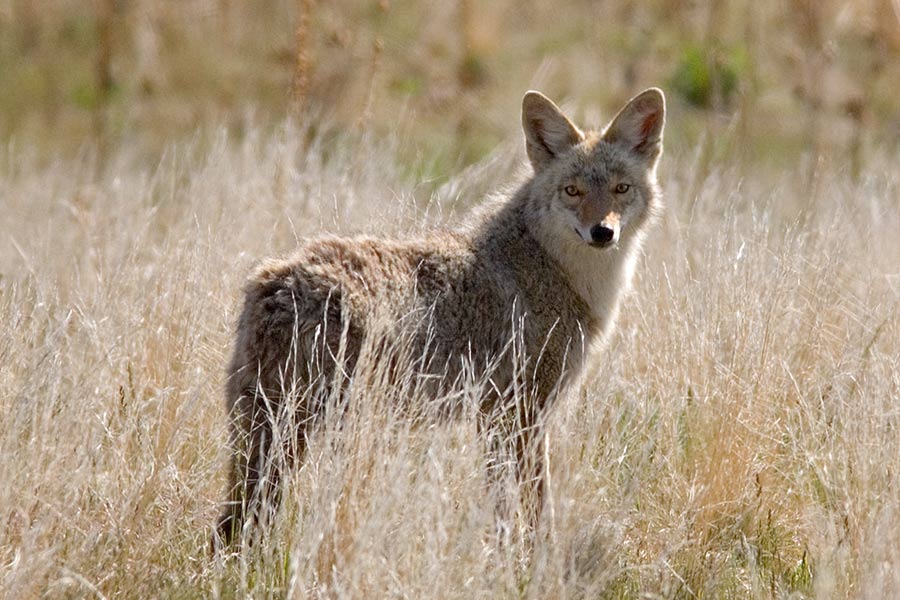
Canine distemper is an infectious, contagious viral disease of many carnivore species (e.g., coyotes, wolves, foxes, mustelids, raccoons, bears, etc.). The virus is transmitted through direct contact with oral, ocular, and respiratory fluids containing the virus. It is not considered a human health threat.
Chlamydiosis

- Details
Chlamydiosis (aka parrot fever, psittacosis) is an infection caused by bacteria of the genus Chlamydia. Severity of the disease differs by bacterial strain and the susceptibility of different bird species. Infection occurs from inhaling bacteria in airborne particles of feces or respiratory exudes. Chlamydiosis can be a serious human health problem.
Chronic wasting disease

- Details
Chronic wasting disease (CWD) is a transmissible disease that affects the nervous systems of deer, elk and moose. Infected animals develop brain lesions, become emaciated, appear listless and have droopy ears, may salivate excessively and eventually die.