
Wildlife diseases in Utah
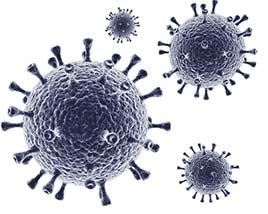
Like people, animals are subject to a wide variety of ailments
Wildlife, domestic animals and humans share a large and increasing number of infectious diseases. The continuing globalization of society, increasing human populations and associated landscape changes will further enhance interfaces between wildlife, domestic animals and humans, thereby facilitating additional infectious disease emergence.
Wildlife species are subject to diseases resulting from exposure to microbes, parasites, toxins and other biological and physical agents. These wildlife diseases are often highly visible and result in large-scale mortality. Such losses are incompatible with healthy, vigorous wildlife populations — making research into, and development of, practical methods for wildlife disease diagnosis and mitigation of wildlife losses a critical component of effective wildlife management.
What the DWR is doing

The DWR has a wildlife disease program in place to (1) monitor and control diseases of concern, such as chronic wasting disease, whirling disease, West Nile virus and avian influenza; (2) investigate sick or dead wildlife reported by wildlife authorities and the public; (3) assess the effects of disease in Utah's wildlife populations; (4) reduce or eliminate diseases that threaten the health and vitality of Utah's wildlife, or that pose a human health risk.
Learn more about the following diseases found in wildlife:
Elaeophorosis
- Details
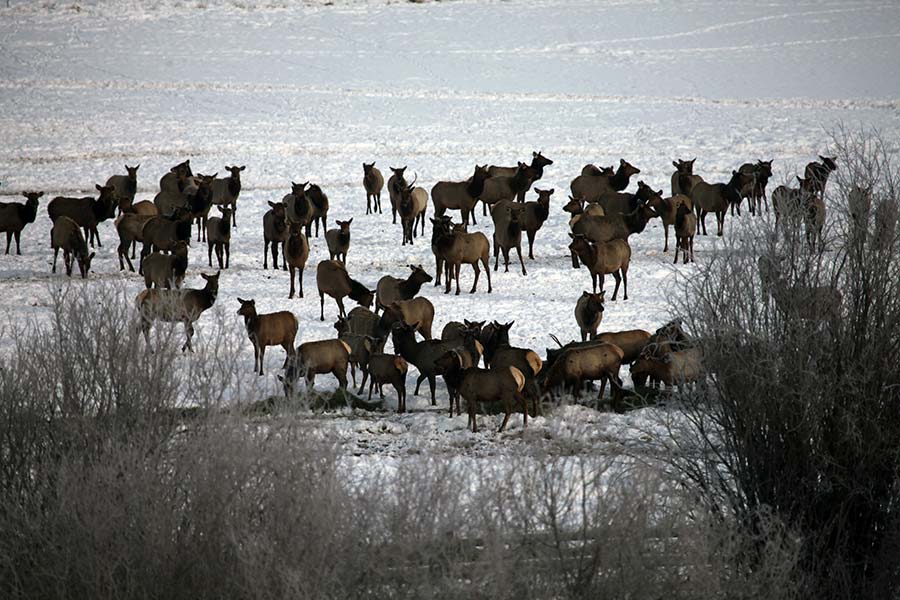
Elaeophora schneideri is an arterial worm commonly found in mule deer in the western and southwestern United States. Elk and moose are considered abnormal hosts and do not have the resistance to heavy infection.
Fungused brown trout

- Details
Occasionally, anglers in the Provo, Ogden, Blacksmith Fork and other rivers notice numbers of sick or dying brown trout. This condition is commonly called "spawning syndrome," although it can occur at other times of the year. It is thought to be caused by the stress and aggression of spawning behavior or other unknown stressors, at a time of year when flows are low and fish are more crowded than usual.
Lead and mercury poisoning

- Details
Lead poisoning is more common in species such as mallards, northern pintail, geese and tundra swans, while frequency decreases in species with more specialized food habits. Mercury is a heavy metal that is toxic to vertebrates, and birds can be exposed to high levels due to their feeding behavior. While lead poisoning is not considered an appreciable risk to hunters, mercury is a human health hazard, and should be avoided.
Monkeypox

- Details
A rare viral disease, most common in parts of Africa where it primarily infects rodents. However, other animals, including humans, can contract monkeypox from exposure to monkeypox lesions and rashes or other fluids from infected animals. No cases of monkeypox have surfaced in Utah.
New World screwworm
- Details
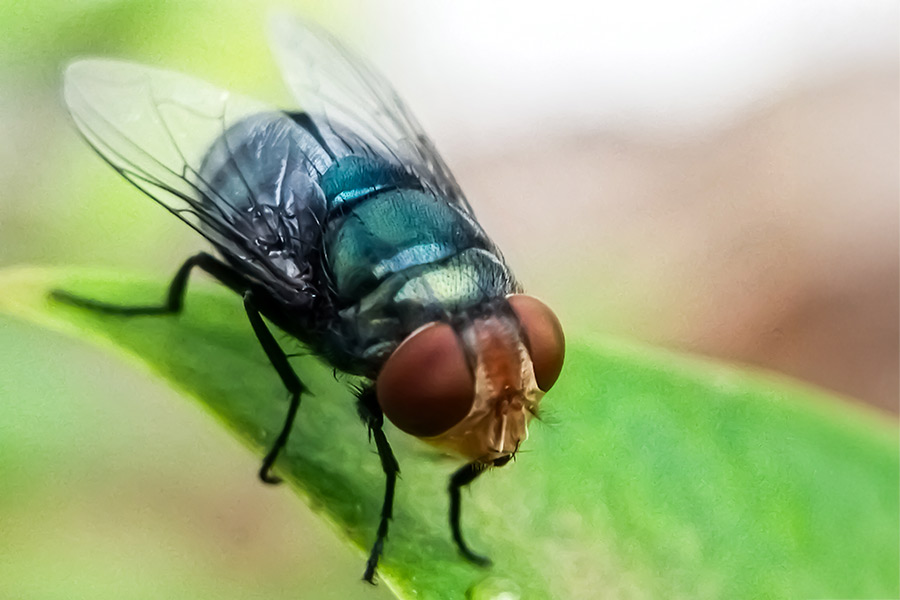
The U.S. Department of Agriculture has detected New World screwworm in the United States. Although it has not yet been identified in Utah, it poses a serious threat to wildlife and domestic animals. For current status updates, visit the USDA website.
Plague
- Details
Plague is a flea-transmitted disease that naturally infects the majority of rodent genera, and is caused by the bacterium Yersinia pestis. Other mammals, most notably prairie dogs, black-footed ferrets, cats, and primates, are highly susceptible to the disease.
Rabbit hemorrhagic disease

- Details
Rabbit hemorrhagic disease serotype 2 (RHDV-2) is classified as a foreign animal disease in the U.S. RHDV-2 is not related to the coronavirus responsible for COVID-19. Both domestic and wild rabbits, as well as pikas, are susceptible to the disease, and infection results in 80-100% mortality.
Rabies

- Details
Rabies is an acute, fatal viral encephalomyelitis found worldwide, and is caused by infection with a virus from the genus Lyssavirus. Transmission occurs primarily through the bites of infected carnivores and bats in the final stage of the disease. Major North American wild reservoirs are raccoons, coyotes, skunks, foxes, and bats.
Sarcocystosis
- Details
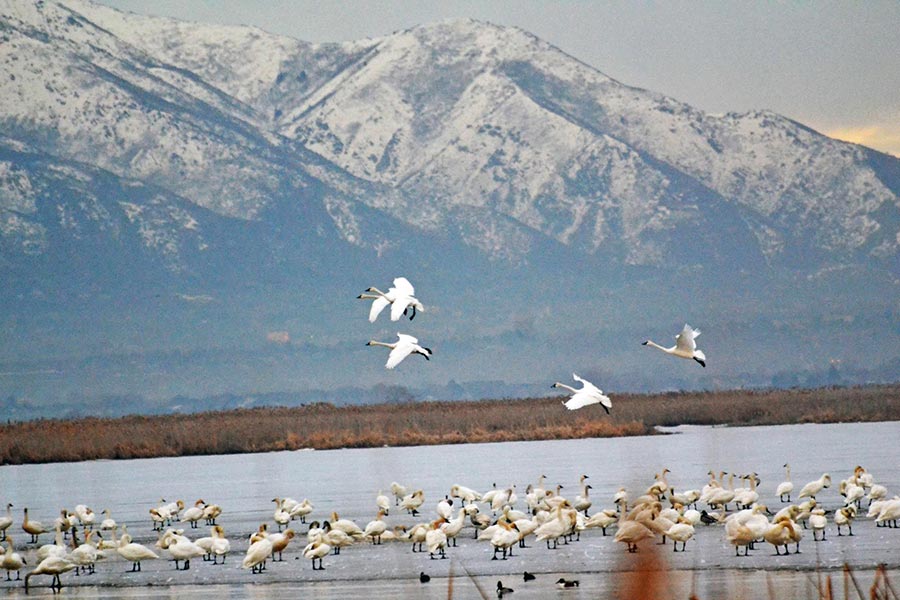
Sarcocystosis (aka rice breast disease) is caused by a parasitic protozoan, and is most often nonfatal and asymptomatic. The disease has been found to affect birds, mammals and reptiles throughout North America.
Tularemia

- Details
Tularemia (aka rabbit fever, hare plague, deerfly fever) is caused by the bacterium Francisella tularensis and is an acute, infectious disease of rabbits, hares and rodents. Humans are susceptible to tularemia, and human cases are often the result from the bite of a tick in the summer or from handling rabbits or hares during hunting season.