
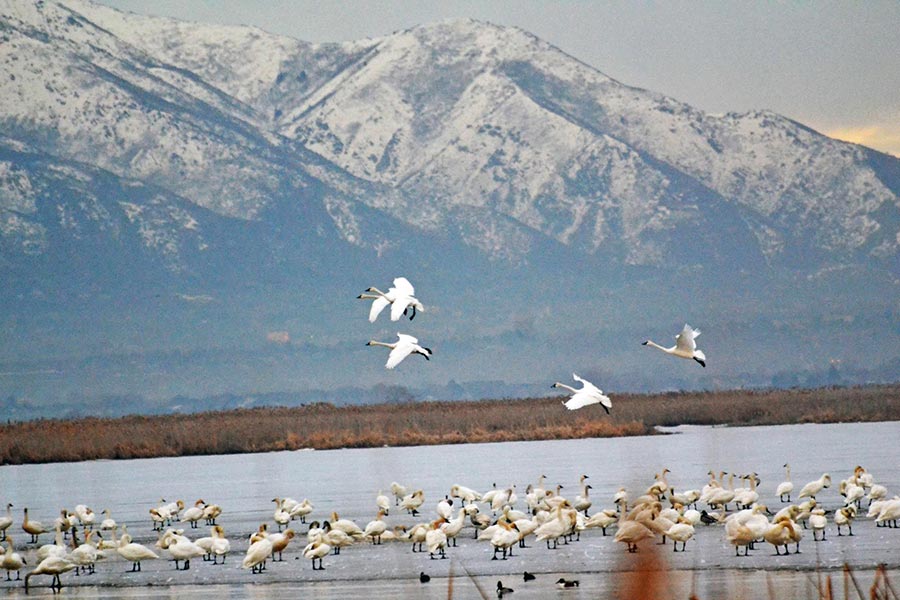
Sarcocystosis (aka rice breast disease) is caused by a parasitic protozoan, and is most often nonfatal and asymptomatic. The disease has been found to affect birds, mammals and reptiles throughout North America. Eggs (oocysts) are excreted in carnivore feces and picked up by herbivores, where they eventually develop into cysts in the cardiac, striated and smooth muscle. Although Sarcocystosis spp. are not known to present health risks to humans, hunters are cautioned from eating heavily infected animals.
Field signs
There are no visible external signs of sarcocystosis, although severe infections may cause weakness, lameness or paralysis. Infection is easily recognized by the presence of white, cylindrical cysts, resembling threads or grains of rice, running through the skeletal and muscle tissue.