
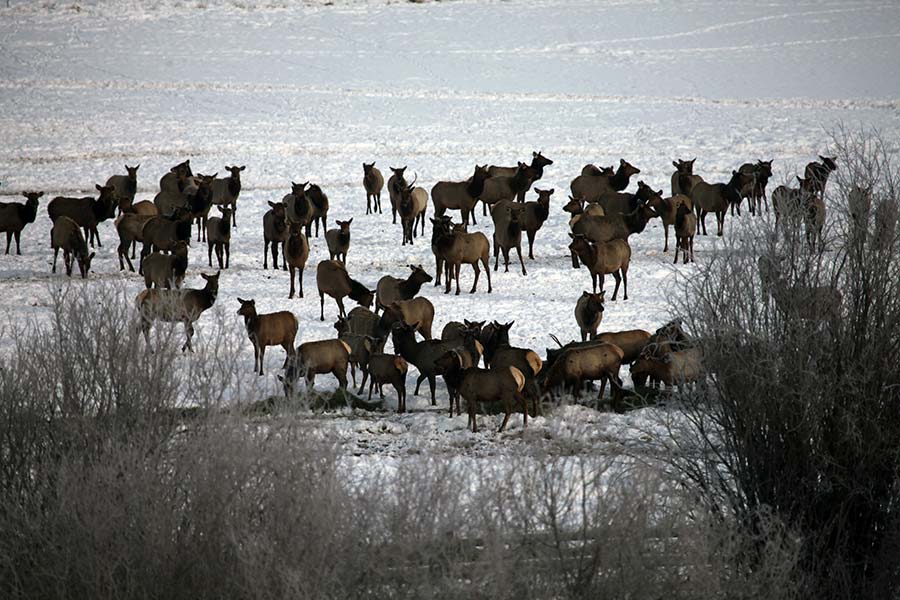
Elaeophora schneideri is an arterial worm commonly found in mule deer in the western and southwestern United States. Larvae accumulate in the blood capillaries of the head and face and are picked up and transmitted by horseflies. Elk and moose are considered abnormal hosts and do not have the resistance to heavy infection. In these hosts, the nematode remains in the arteries that furnish the head and brain with adequate blood supply. Lowered levels of blood can lead to brain damage, blindness, and cause extremities, such as the ears and nose, to freeze and fall off during cold months.
During years when weather conditions are favorable for horsefly activity, extremely heavy infections can occur and elaeophorosis is found more frequently in elk and moose.