
Wildlife around the Great Salt Lake
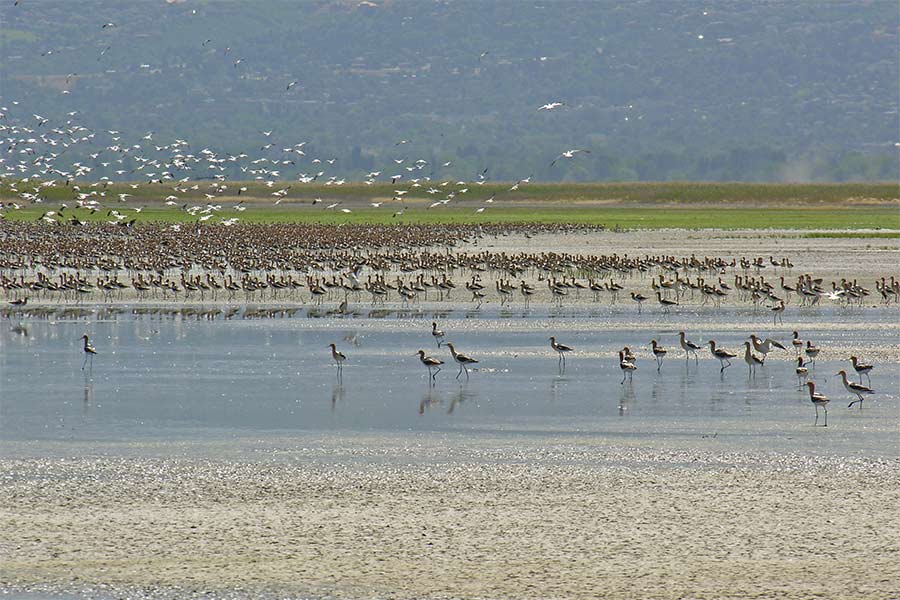
Vibrant ecosystems from the water to the shore
The Great Salt Lake is home to many important biological and wildlife species, from archaea, to bacteria, to phytoplankton (400+ species). Perhaps the three most apparent species that can be seen with the naked eye are brine shrimp (tons), brine flies (billions) and birds (millions).
Think of the lake as a highly productive organic machine that's capable of growing incredible amounts of food (biomass) that keeps many of our avian migratory visitors alive and to proliferate both in North and South America, from Alaska to Argentina!
Unlike other aquatic ecosystems, the lake consists of a generally short but efficient link between water, nutrient and solar energy inputs that flow to and among higher orders of animal life. However, the balance in the lake's function can change with just a small fluctuation in one of those components, whether physical or biological.
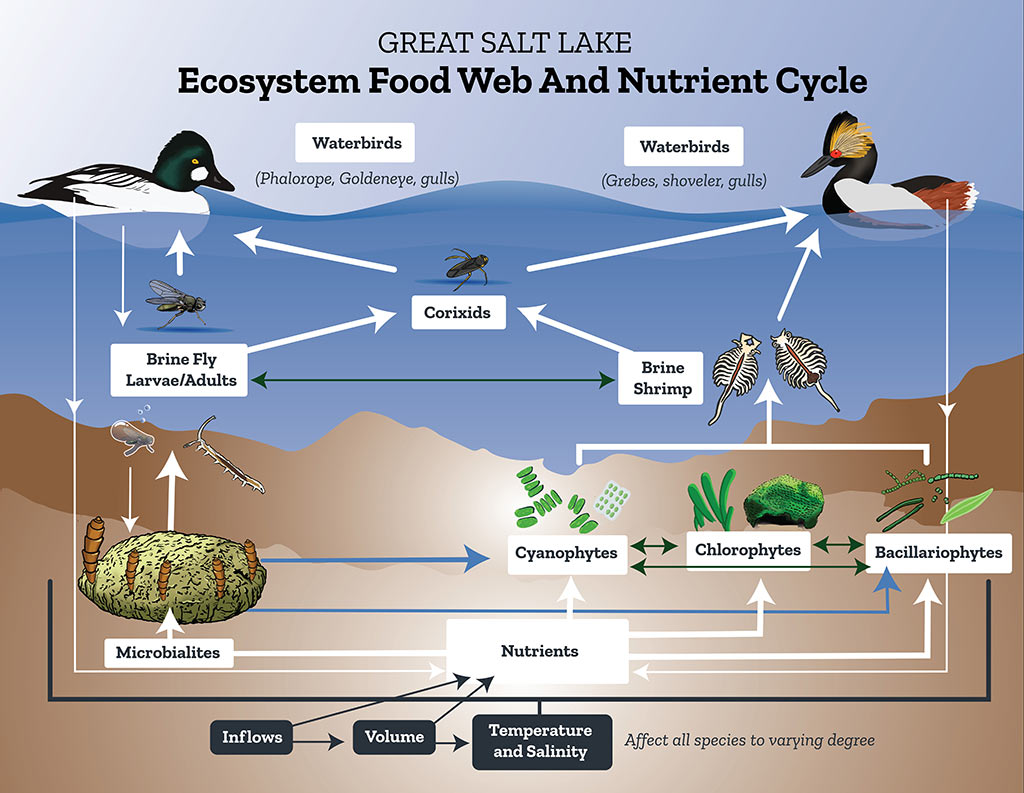
*Courtesy Barrett & Belovsky, 2020