

Utah's fish hatcheries
From spawning to stocking
Our primary goal is to create a fun and successful fishing experience for Utah anglers. To achieve this, the DWR's 13 hatcheries stock almost 10 million fish annually — ranging in size from tiny fingerlings to 12-inch rainbow trout — at more than 1,000 Utah waterbodies every year.
Hatchery history
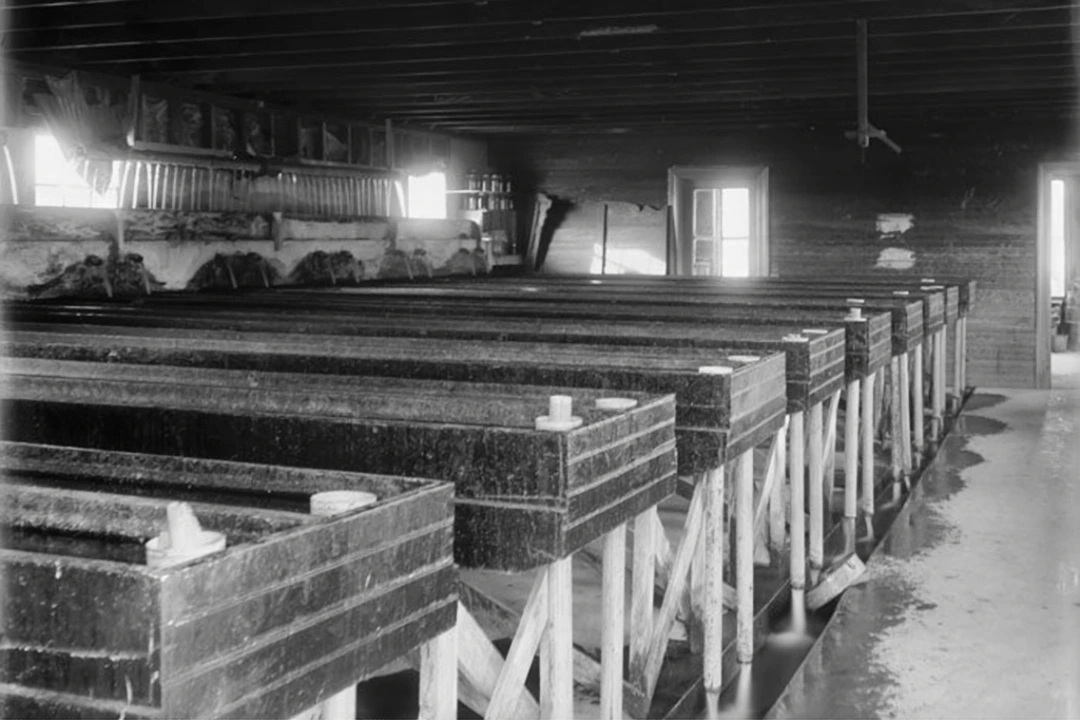
The roots of the DWR hatchery program go as far back as 1871, when the first hatchery-raised fish were released in the state. In 1882, the Utah legislature created the position for a territorial fish commissioner and dedicated funds for building a fish hatchery in Salt Lake County.


Where Utah's hatcheries are located
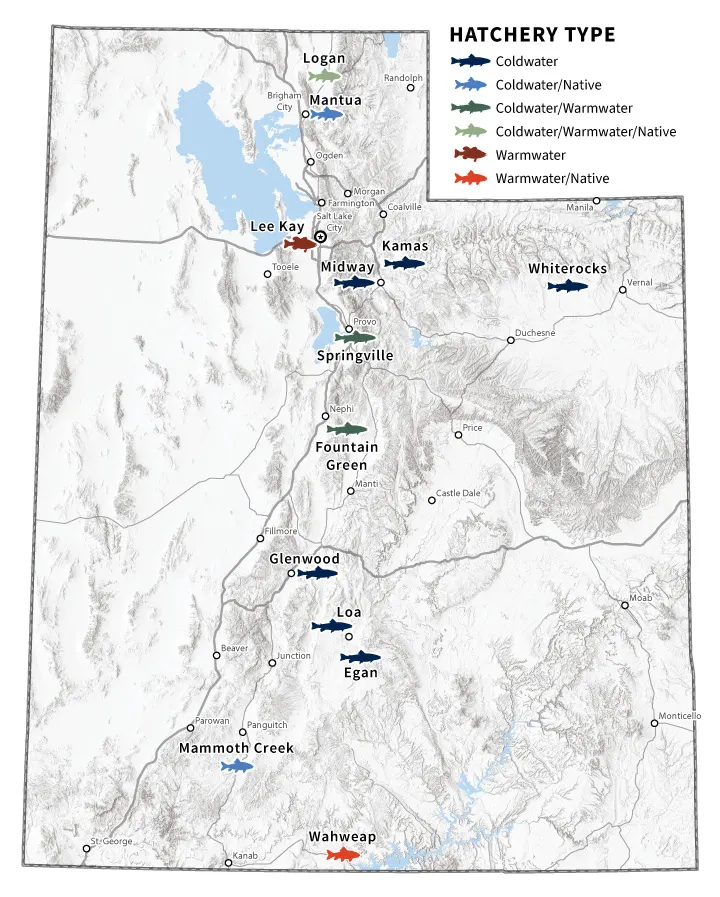
Utah's hatcheries grow the following types of species:
- Coldwater: Glenwood, J. Perry Egan, Kamas, Loa, Midway and Whiterocks
- Coldwater/native: Mantua and Mammoth Creek
- Coldwater/warmwater: Fountain Green and Springville
- Coldwater/warmwater/native: Logan
- Warmwater: Lee Kay
- Warmwater/native: Wahweap
Biosafety
Growing healthy fish requires very specific conditions and clean water. Hatcheries rely upon natural water sources like springs or diverted streams, and this water is in turn filtered and tested before being used in the hatchery setting. Unfortunately, fish — especially when young — are susceptible to bacteria, fungus, parasites, disease and invasive competing species. All of these contaminants are easily transmitted and can quickly spread within a hatchery's water system if not identified quickly. In the past, entire hatchery programs have been wiped out by compromised water supply. Contaminants can also be unintentionally brought into the hatchery environment on shoes, waders or vehicles.
Same goal, different jobs
Generally, Utah's fish hatcheries specialize in either warmwater or coldwater fish species, depending on their location and water source.
What happens at a hatchery?
Utah's fish hatcheries typically operate in three somewhat overlapping capacities:
- Broodstock facilities collect milt and eggs from mature fish, and fertilize and incubate live fish eggs to distribute to other hatcheries. Some hatcheries support breeding populations of rare, threatened or endangered fish species.
- Production facilities raise fish from the egg stage through progressively larger swimming environments (indoor tanks and indoor/outdoor raceways) until they are big enough to stock, and distribute fish throughout the state.
- Research facilities focus on the science of fish culture, including fish disease control, aquaculture, fish quality assurance, fish health management and fisheries management. The DWR's Aquatic Animal Health and Research Center (formerly called the Fisheries Experiment Station) is the main research facility for the state.
The majority of the fish stocked in Utah's waters are raised at DWR hatcheries, however, some are transported from disease-free certified hatcheries across the U.S.
Can I visit DWR hatcheries?

For the health and safety of the fish, most of Utah's fish hatcheries do not allow public tours or visitors, or do so on a by-appointment-only basis. Please respect all signage and closed areas to protect fish health and safety operations at our state's fish hatcheries.
Learn more
- Find a fishing spot near you and view stocking reports at Fish Utah
- DWR blog post: Top 5 reasons to work in fish culture
- About Aerial fish stocking in Utah
- DWR blog post: How Utah's fish hatcheries adapt to drought
- DWR "Wild" podcast, episode 6: Inside a fish hatchery
- DWR blog post: What's the scoop on fish hatchery technology?
- DWR "Wild" podcast, episode 17: The Fisheries Experiment Station (now called the Animal Aquatic Health and Research Center)
- DWR blog post: Exciting fish culture projects at Fountain Green Fish Hatchery
- DWR "Wild" podcast, episode 78: What anglers should know about Utah's future fish stocking