

Utah's big game range trend studies
Tracking changes in the health of big game winter range conditions
The ability to detect changes in vegetation composition on big game winter ranges is an important part of the DWR's big game management program. The health and vigor of Utah's big game populations are closely correlated to the quality and quantity of forage in key areas.
Browse our interactive map
The Range Trends Studies interactive map is is a dynamic tool that displays big game habitat monitoring sites throughout Utah. You may use this tool to generate site-specific monitoring reports to explore long-term vegetation trends and examine changes in plant composition across key big game areas.
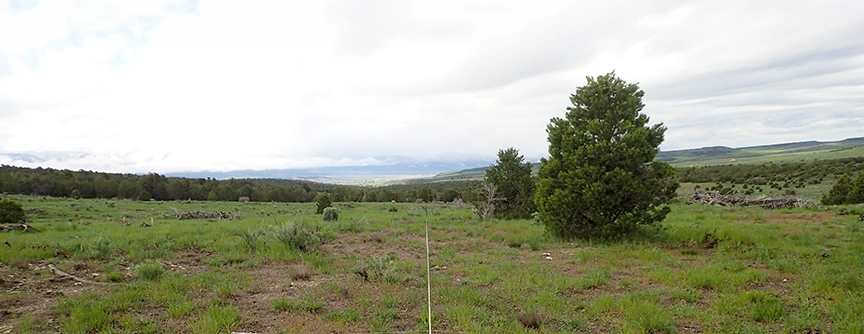
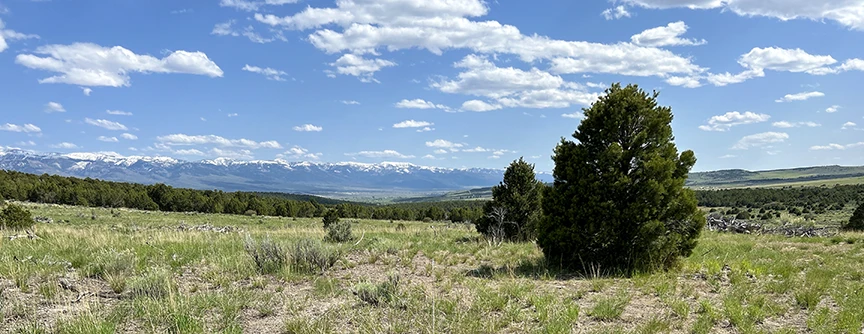
The majority of the permanent range trend studies are located on deer and elk winter ranges. On certain management units, however, these studies are also located on spring and summer ranges if the vegetation composition is the limiting factor for big game populations. Wildlife biologists and other land managers use range trend data for habitat improvement planning purposes, reviewing Bureau of Land Management and U.S. Forest Service allotment management plans, and as another source of information for deer and elk management plans.


Objectives
Monitor, evaluate and report range trends at designated key areas throughout the state, and inform division biologists, public land managers and private landowners of significant changes in plant community composition in these areas.
Expected results and benefits
Range trend studies in each of the state's DWR regions are resurveyed every five years, and vegetation condition and trend assessments are made for key areas. DWR biologists, land management personnel from the USFS and BLM, and private landowners use the range trend database to evaluate the effect of land management programs on big game habitat. Special studies (habitat project monitoring and big game/livestock forage utilization studies) give DWR biologists and public land managers additional information to address local resource management problems.
Annual reports
Annual reports of range trend studies are published annually on a rotating, five-year regional schedule; these reports document long-term vegetation and rangeland assessments across Utah. Each volume combines field data and biologist assessments to track ecological changes and evaluate key big game habitat.
Range trend methods
Studies monitoring range trends depend greatly on site selection — especially when dealing with large geographic areas such as wildlife management units. Since it is impossible to intensively monitor all vegetation or habitat types within a unit, it is necessary to concentrate on specific sites and/or "key" areas within distinct plant communities on big game ranges.
- Read more about our range trend methods – PDF (179.41 KB)
Funding
The DWR's Range Trend Program is primarily funded by Pittman-Robertson federal aid dollars through Federal Aid Grant W-82-R, Wildlife Habitat Monitoring / Range Trend Studies. In addition, several state and federal agencies act as funding cooperators to the project. These are the Utah Division of Wildlife Resources, Bureau of Land Management and the U.S. Forest Service.
Employment opportunities
The Range Trend Project hires seasonal wildlife technicians to conduct field work every year. These positions are usually advertised in January and filled by mid-March. You can see a list of currently available seasonal positions at the Utah Department of Natural Resources website or contact the project leader or an assistant project leader at the phone number below.
Contact us
-
Utah Division of Wildlife Resources
Range Trend Project
Great Basin Research Center
494 W. 100 South
Ephraim, UT 84627Phone: 435-283-4441
Fax: 435-283-2034